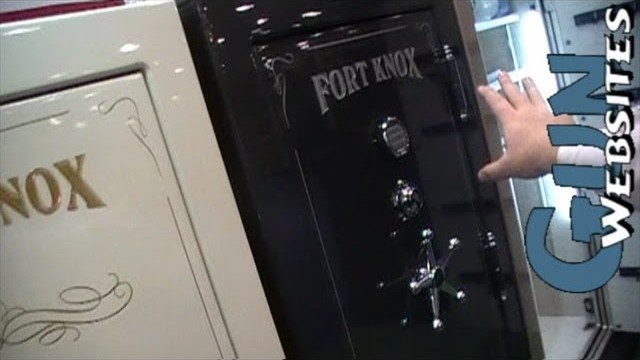
Gun vaults are the full-size safes most people picture: heavy steel, a thick door and room for rifles, shotguns and handguns. For a home collection they offer the best mix of theft and fire protection.
What to look for
- Steel: lower gauge numbers mean thicker steel. A 12-gauge body is a solid start; 10-gauge and thicker is better.
- Door and bolts: a thick door, locking bolts on several sides and a relocker that fires if the lock is attacked.
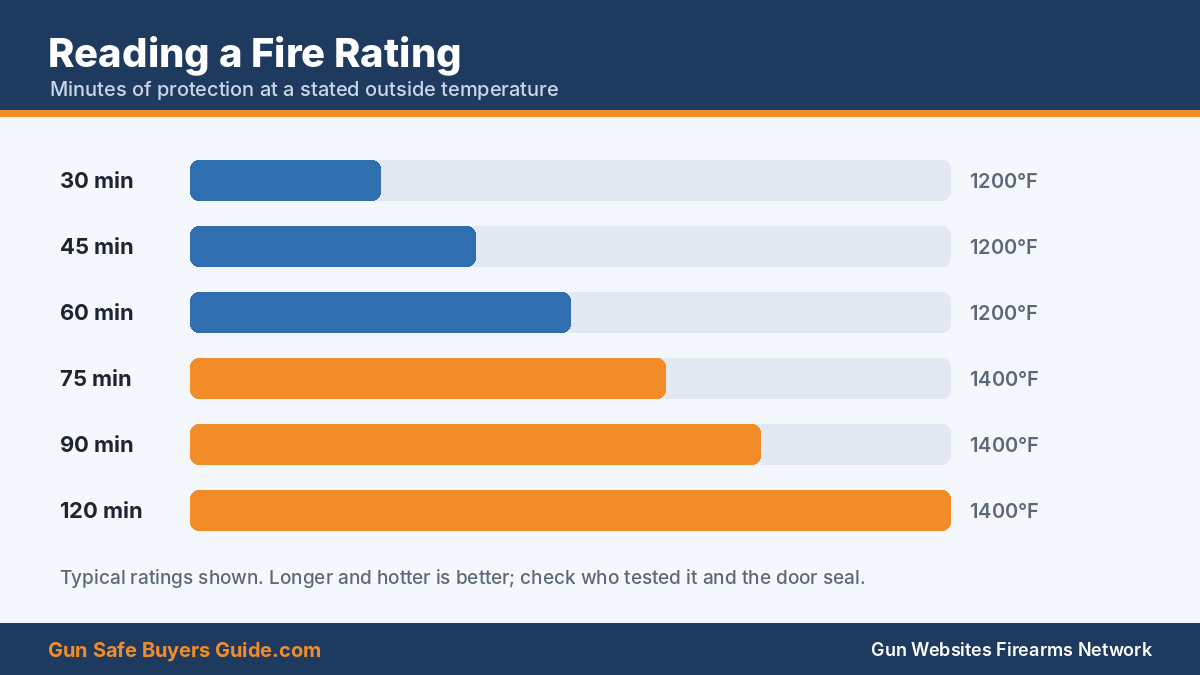
- Fire rating: time and temperature both listed, plus an expanding door seal.
- Interior: adjustable shelves, room for scoped rifles and a door organizer for pistols and magazines.
Fire protection
A fire rating tells how long the inside stays below the point where paper chars at a given outside temperature. Longer and hotter is better. Ratings from an independent lab carry more weight than a maker’s own test.
Plan for capacity
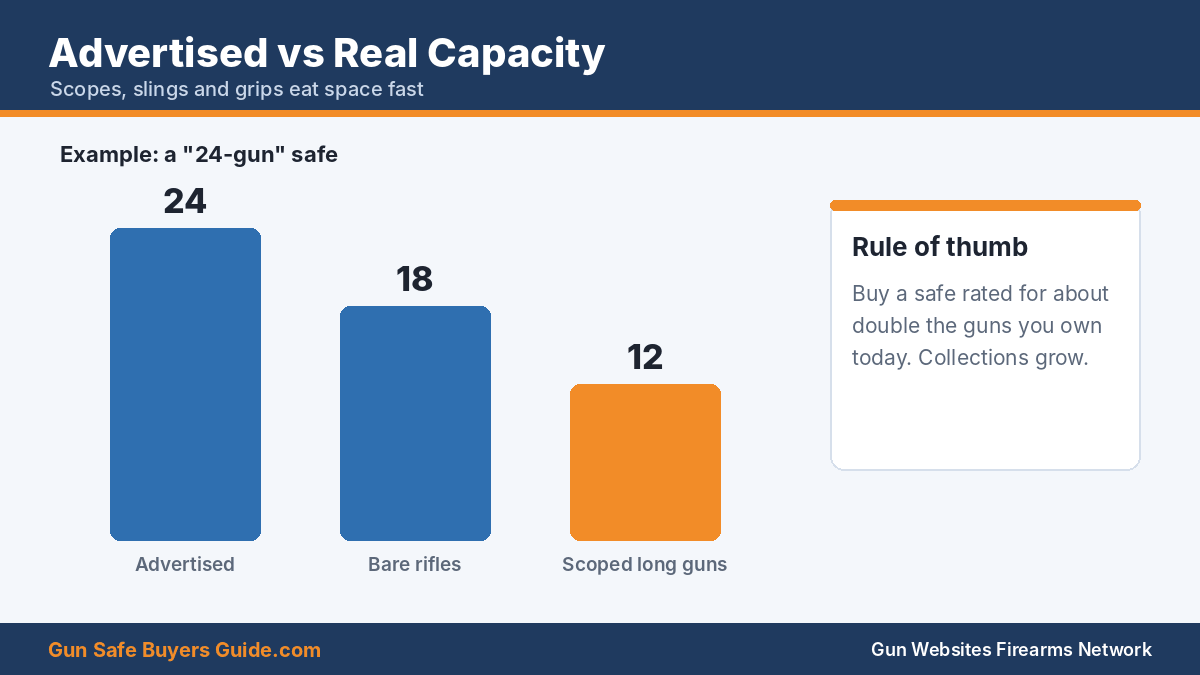
A “24-gun” safe rarely holds 24 real-world long guns. Size up now and the safe will still fit the collection years from now. Choosing a Gun Safe covers sizing in detail.
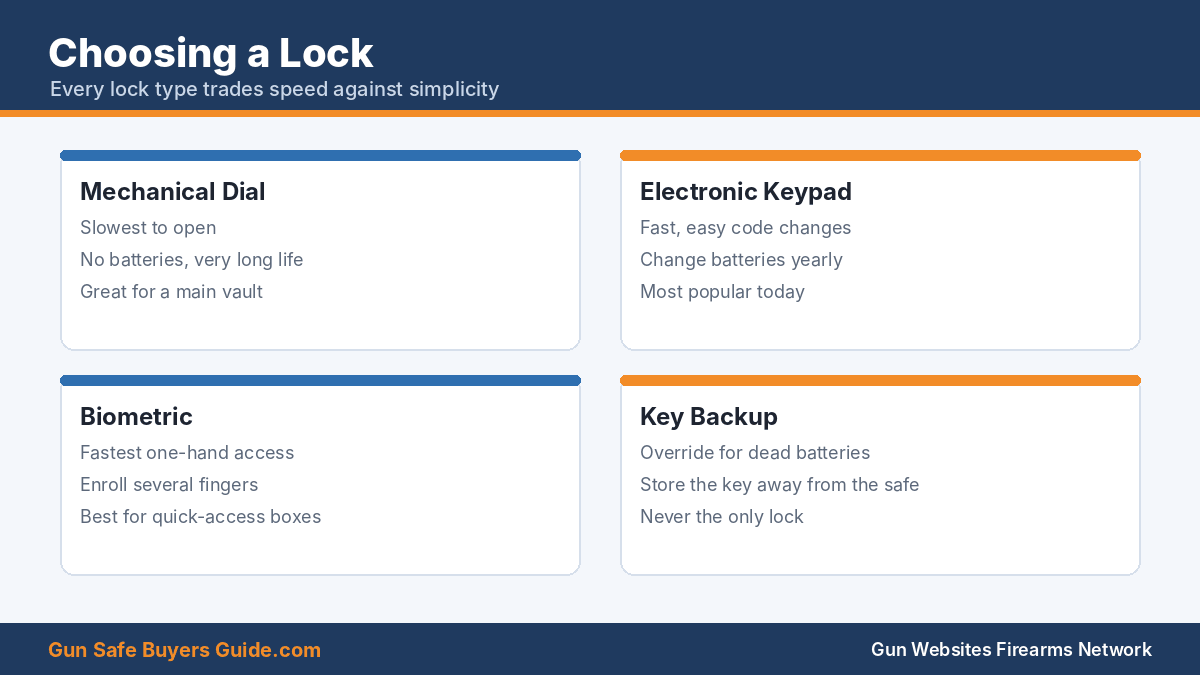
Pick a lock
Dial locks last for decades with no batteries. Electronic keypads open fast and make code changes easy. Many owners choose a keypad on the main vault and keep a quick-access handgun safe by the bed.