Every gun safe looks tough in the showroom. The differences that matter are size, fire protection, steel, the lock and where it ends up in the house. Get those five right and the safe will serve for decades.
Size and capacity
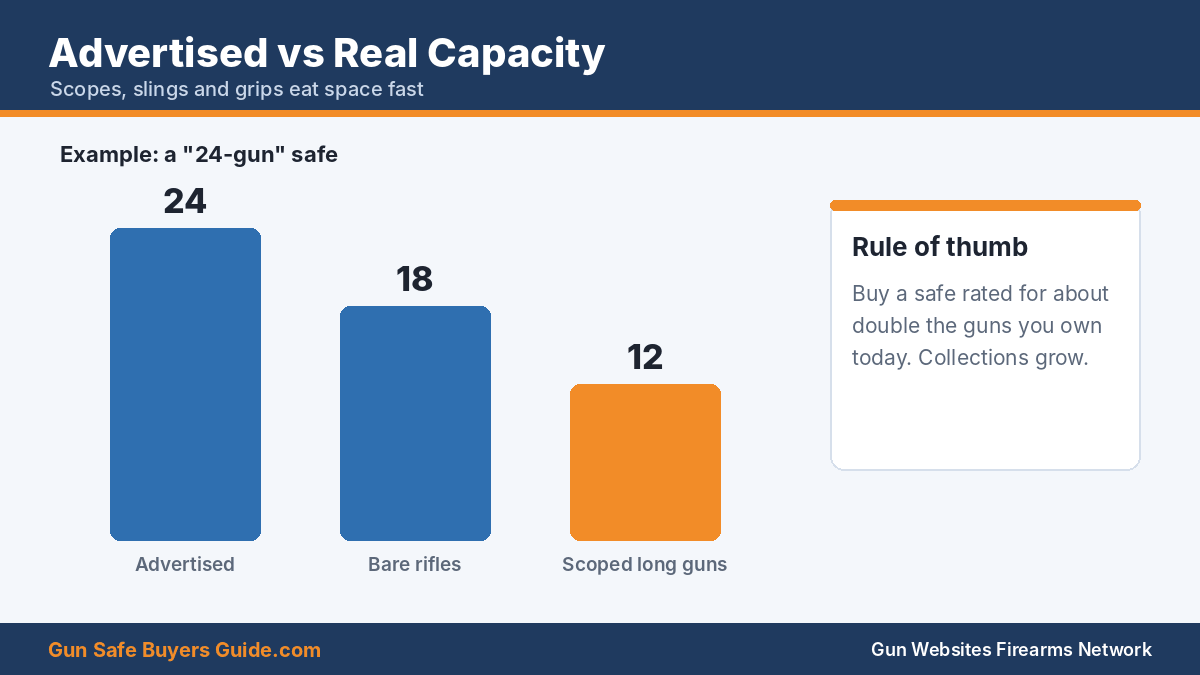
Count every long gun, handgun and case of ammo that needs a home, then buy a safe rated for about double that. Interior height matters for long barrels and suppressors.
Fire rating
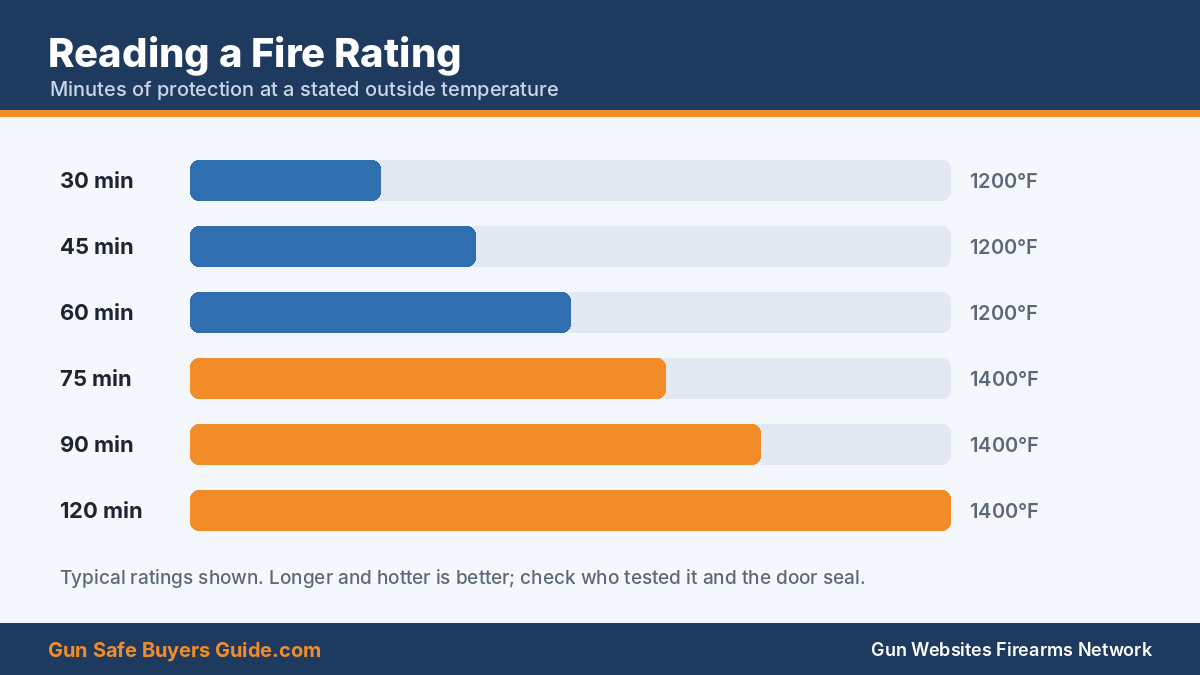
Look for both minutes and temperature, such as 60 minutes at 1200°F. Independent testing beats a maker’s own claim. An expanding door seal keeps out heat and smoke.
Steel and construction
Body steel thickness, a heavy door, bolts on several sides and a hardplate protecting the lock are the core of theft resistance. Weight is a good rough guide: heavier usually means more steel.
The lock
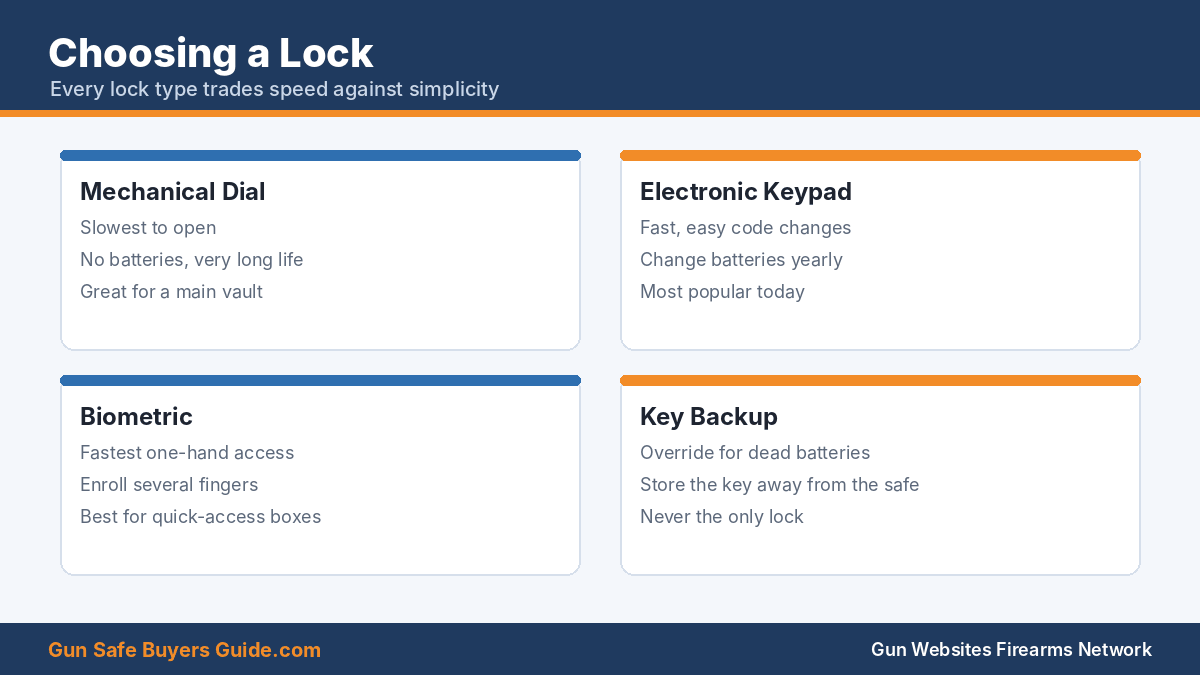
Dial, keypad or biometric: pick the one that will get used every day. A safe left unlocked because the lock is a hassle protects nothing.
Placement and bolting
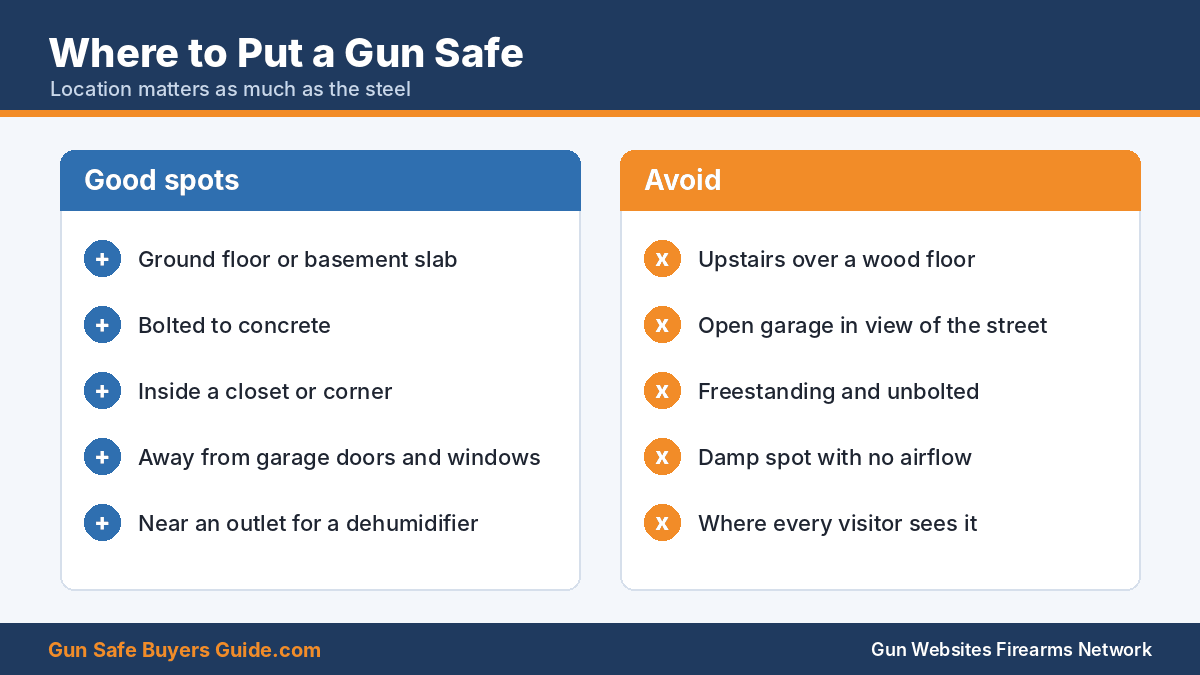
Ground floor, concrete slab, out of sight and bolted down. Measure doorways and stairs before delivery day.
Buy once
Most owners outgrow their first safe. Spending a little more on size and steel now costs less than buying a second safe later. Compare the main options in Gun Vaults and Handgun Safes.